
Korean Birthday Traditions: Seaweed Soup, Cake, and Celebrating With Friends
A Korean friend mentions that their birthday is coming up. You offer to buy a cake, and someone else asks, “Have you had your seaweed soup yet?” Wait—soup on a…
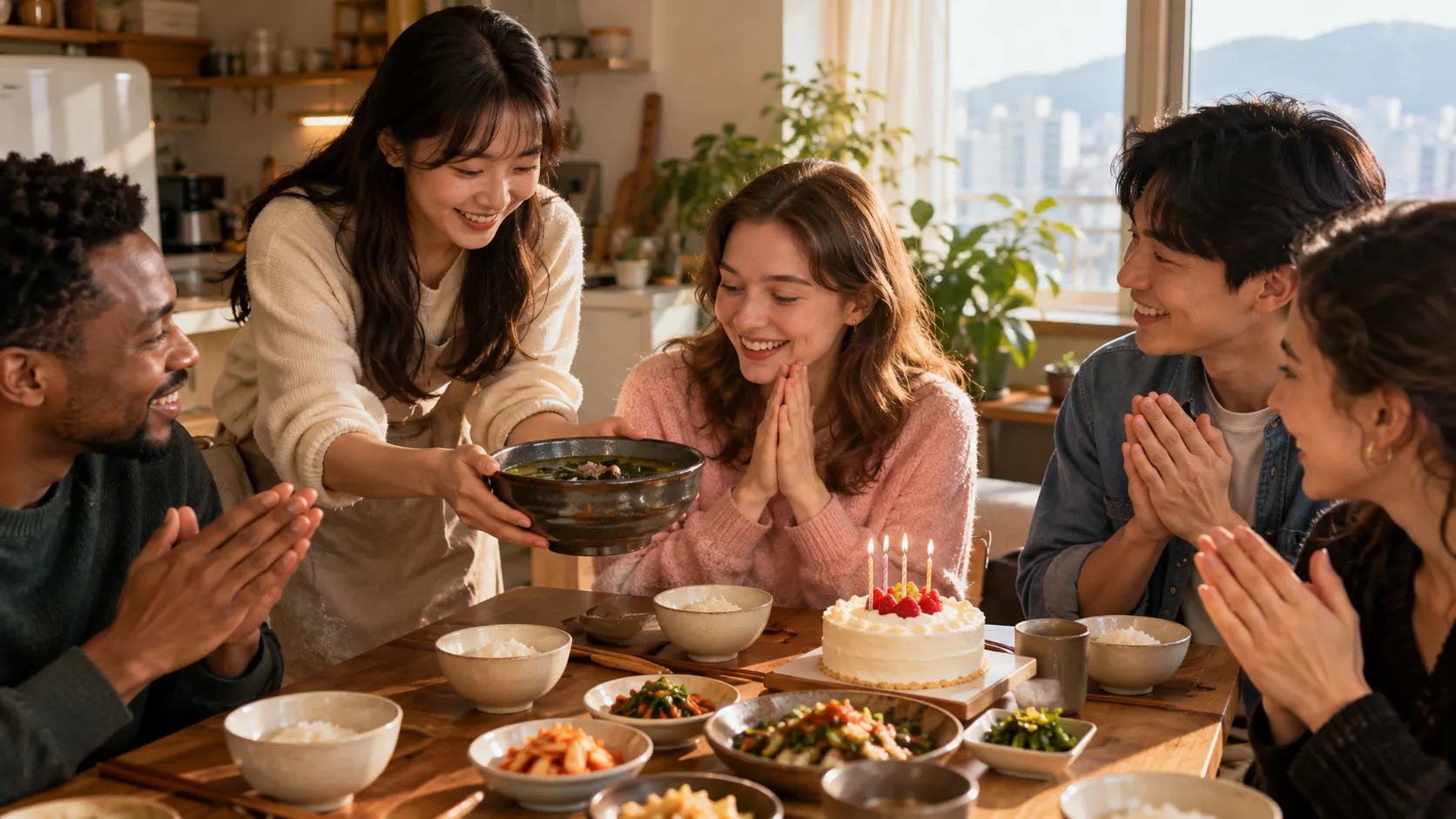
A Korean friend mentions that their birthday is coming up. You offer to buy a cake, and someone else asks, “Have you had your seaweed soup yet?” Wait—soup on a birthday?
If you're new to Korea, the combination of miyeokguk (미역국), cake, and casual get-togethers might surprise you. But the best way to celebrate someone isn't to memorize a national rulebook. It's to understand a few traditions, then ask your friend what they would enjoy.
Why seaweed soup on a birthday?
Miyeokguk is a mild soup made with seaweed and a broth that might contain beef, seafood, or other ingredients. It has a special connection to birthdays because seaweed soup has traditionally been served to mothers after childbirth. Eating it on your birthday can be a way of remembering the person who gave birth to you.
The Korea Tourism Organization explains this connection in its guide to Korean food and feelings. The custom is widely recognizable, but that doesn't mean every person cooks soup or follows the same routine every year.
A friend might have a homemade bowl in the morning, pick some up at a restaurant, or skip it entirely. If you're curious, ask rather than assume.
Does that mean there won't be cake?
Not at all. A small cake, a meal together, or a relaxed gathering can fit alongside traditional food. Some people love candles and singing; others prefer a quiet dinner or a message from a friend.
The most useful birthday question is simply: “Do you want to do anything for your birthday?” It gives the person space to say what feels good instead of making the celebration about your expectations.
If you're hoping to organize a small gathering, check whether they're comfortable with surprises. A surprise party can be fun for one person and exhausting for another, particularly when they don't know everyone invited.
Should you bring a gift?
For a casual birthday meet-up, a modest thoughtful gesture can be enough. A favorite snack, a card, or offering to buy coffee may feel more personal than an expensive gift. You don't have to spend heavily to show that you remembered.
Think about the relationship, too. A coworker you know casually might appreciate a short message more than a present. A close friend might enjoy a small activity you've planned together.
And if you're choosing food, ask about allergies, religious restrictions, and dietary preferences. Miyeokguk, for instance, may contain beef, seafood, or anchovy-based broth depending on the recipe. “Seaweed soup” doesn't automatically mean vegetarian.
Six useful Korean birthday phrases
생일 축하해요! — Happy birthday! (Polite and friendly.)
생일 축하해! — Happy birthday! (Casual; use with someone you're close to.)
미역국 먹었어요? — Have you had your seaweed soup?
생일에 뭐 하고 싶어요? — What would you like to do for your birthday?
제가 커피 살게요. — I'll treat you to coffee.
좋은 하루 보내세요! — Have a lovely day!
These phrases are starting points, not lines you must recite. Tone and closeness matter more than squeezing every expression into one conversation.
An easy birthday plan that doesn't feel forced
Imagine someone you've met twice at a language exchange has a birthday next week. You'd like to be friendly without acting as though you're already close friends.
Send a message: “Happy birthday! Hope you have a great day. If you'd like, I can get you coffee after our next meetup.”
That's enough. It communicates warmth without asking for an immediate commitment. If they say yes, keep the plan simple. If they decline, wish them well and leave it there.
For an established group of friends, you could arrange a meal with everyone's budget in mind. Confirm the location, any shared costs, whether photos are welcome, and whether the birthday person actually wants a group celebration.
Learn the tradition, then learn the person
Birthdays are a useful window into a culture because small habits—such as asking about seaweed soup—can carry stories about family and care. But people living in Korea don't all celebrate alike, and friends from other countries bring their own traditions too.
Ask your friend how birthdays worked in their family. Share something about yours. Those conversations often become more memorable than getting every custom “right.”
If you're in Daejeon and want more chances to meet Korean and international residents, nurio hosts in-person language exchanges and social gatherings where new conversations can begin. A good friendship might start with one question about birthdays—and continue long after the cake is gone.
Turn reading into a real conversation
Meet people and practice together
Join a welcoming Nurio event and use what you learned with real people.
Browse upcoming events